
Latest posts
-
How to Match Tractor Hydraulic Flow to an Implement
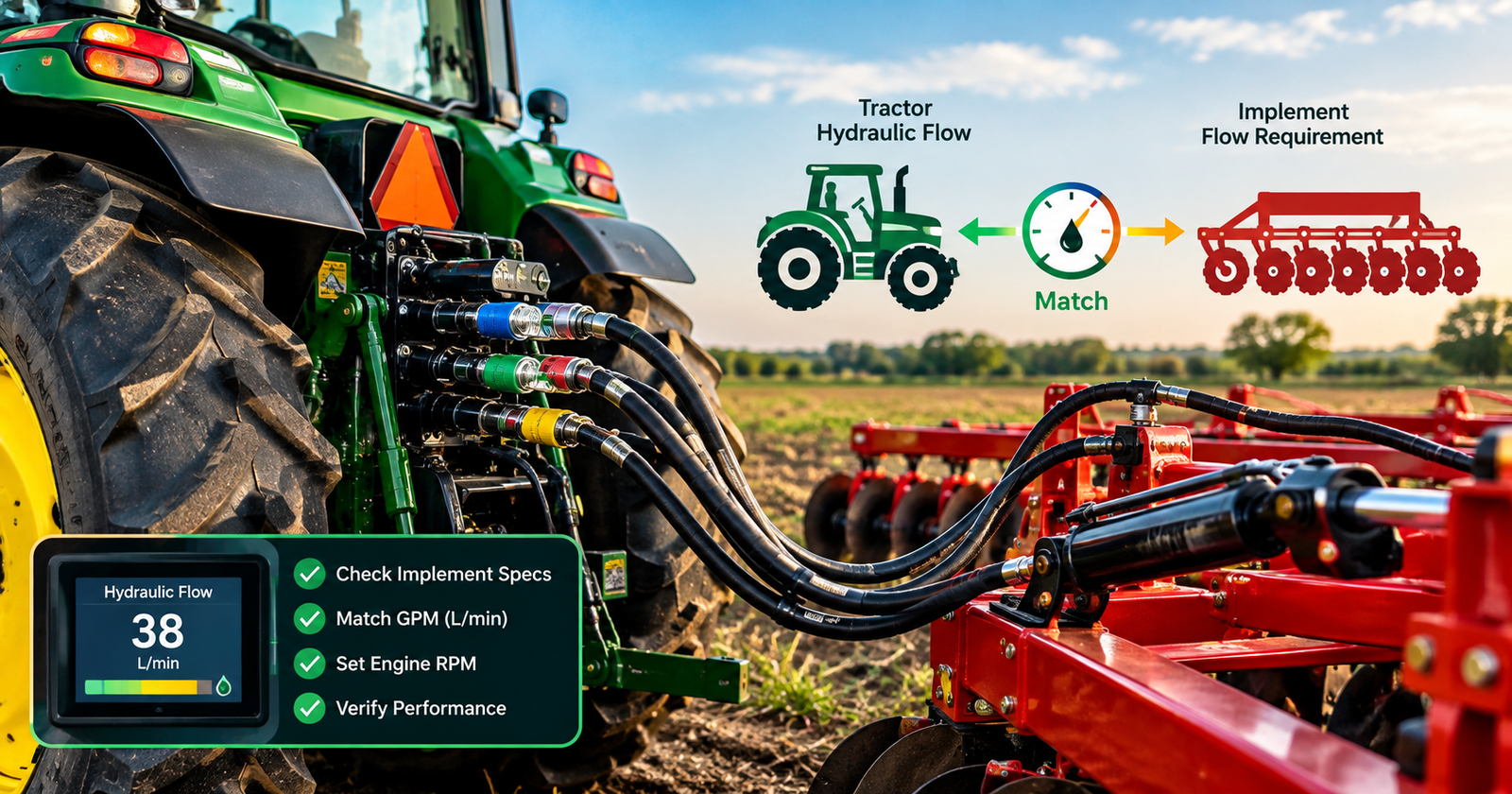
Hydraulic flow affects how quickly a hydraulic motor or cylinder can move. Matching tractor hydraulic flow to an implement means checking more than a single GPM figure: pressure, return plumbing, couplers, control type, and the implement maker’s instructions also matter. Quick answer The safest starting point for match tractor hydraulic flow to implement is to…
-
Tractor Hydraulic Remotes Explained
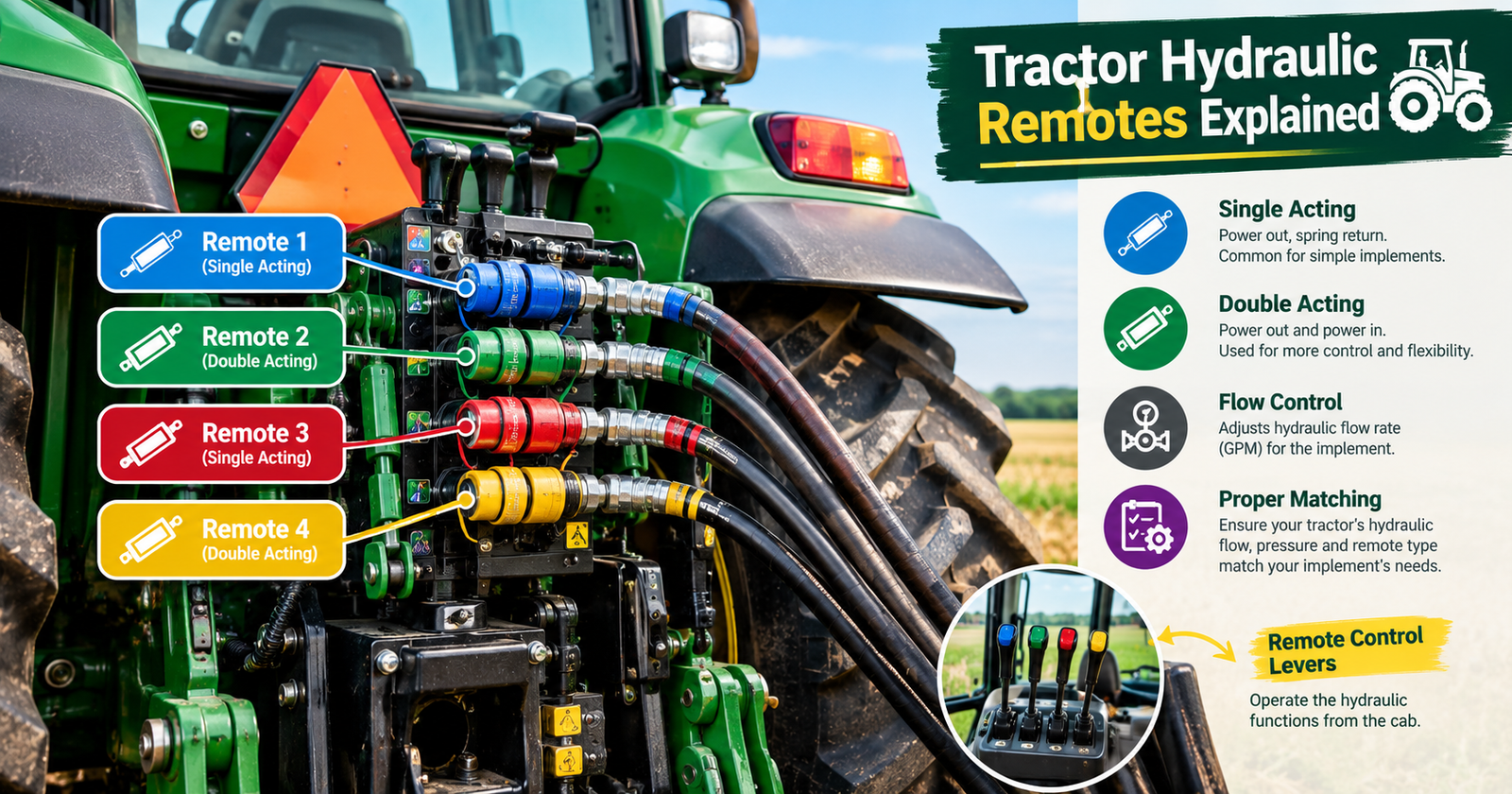
Tractor hydraulic remotes are connection points that let the tractor supply hydraulic power to compatible implements. They are often used for cylinders, folding frames, angle adjustments, and hydraulic motors. The number and type of remotes determine which functions can be operated and how they must be connected. Quick answer The safest starting point for tractor…
-
Tractor Implement Horsepower Requirements
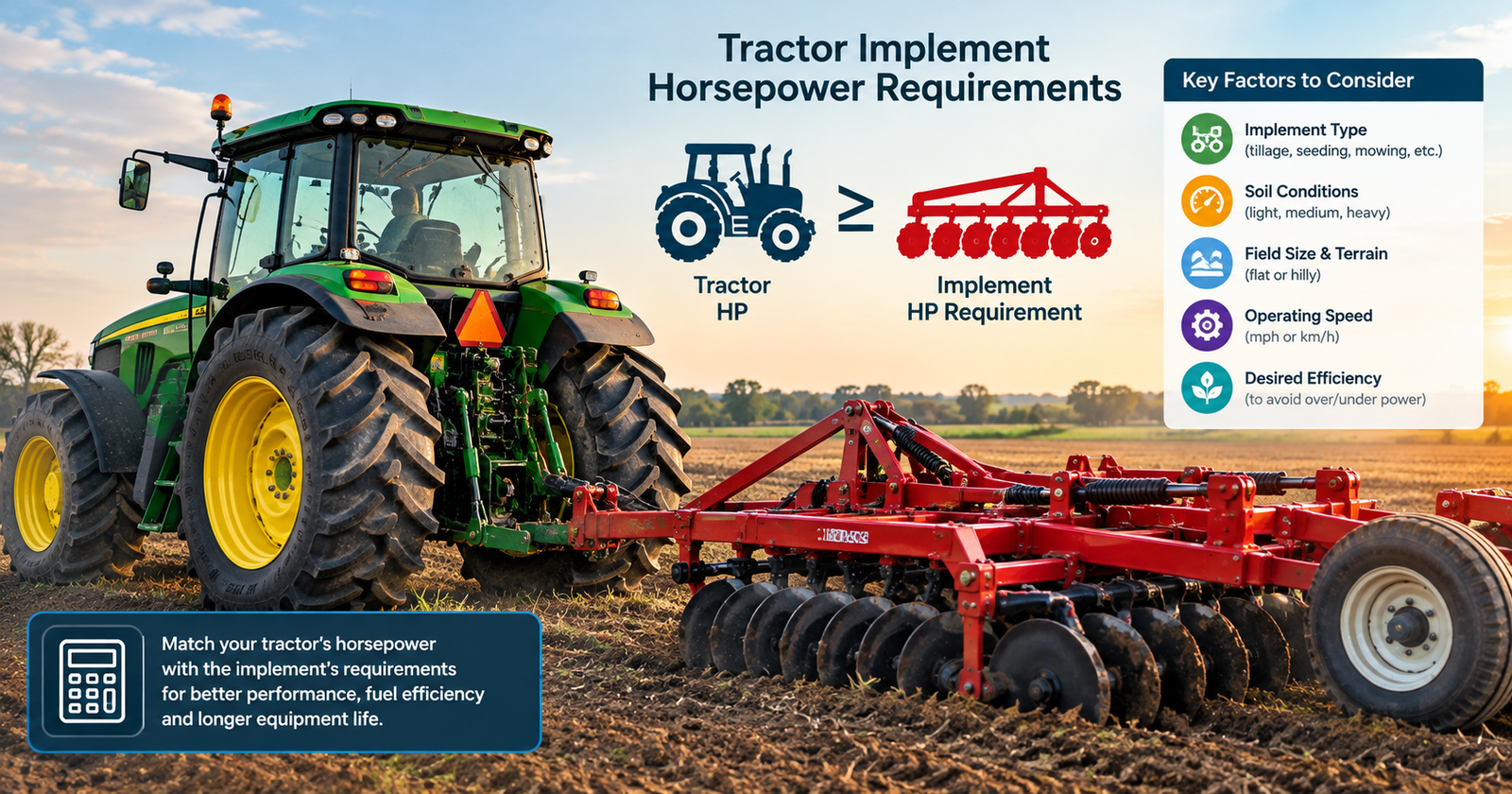
Choosing tractor horsepower for an implement is not as simple as matching two numbers. The right tractor depends on the implement’s power source, working width, soil and crop conditions, speed, terrain, hydraulic needs, and the limits listed by the manufacturers. Quick answer The safest starting point for tractor implement horsepower requirements is to use the…
-
Tractor Fuel Consumption per Hour
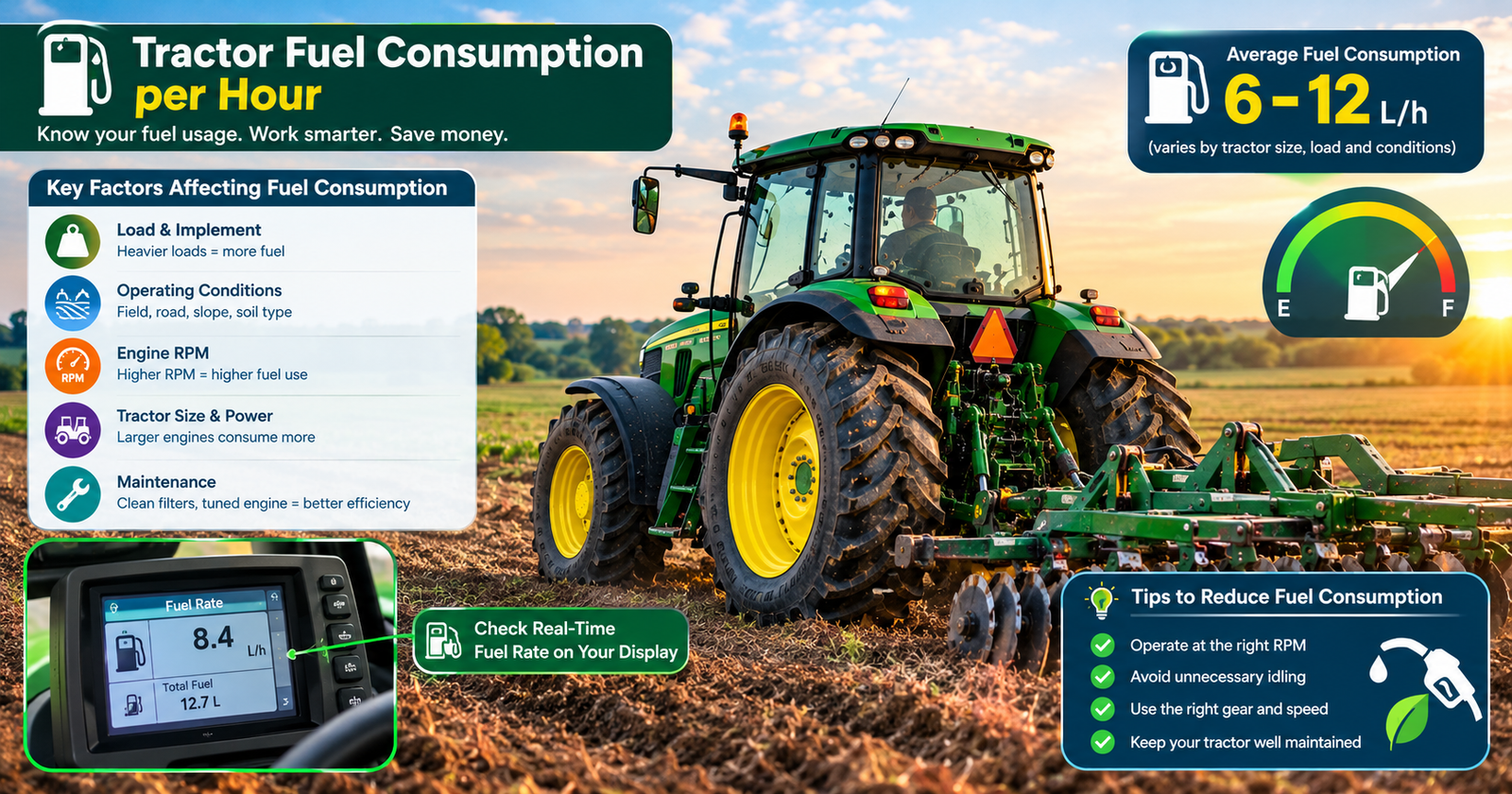
Tractor fuel consumption per hour helps estimate operating costs, plan fuel supply, and compare jobs. There is no single fuel-use number for a tractor because engine load, speed, soil, implement, maintenance, and operator habits all affect consumption. Quick answer The safest starting point for tractor fuel consumption per hour is to use the exact machine…
-
Sprayer Ground Speed Calibration
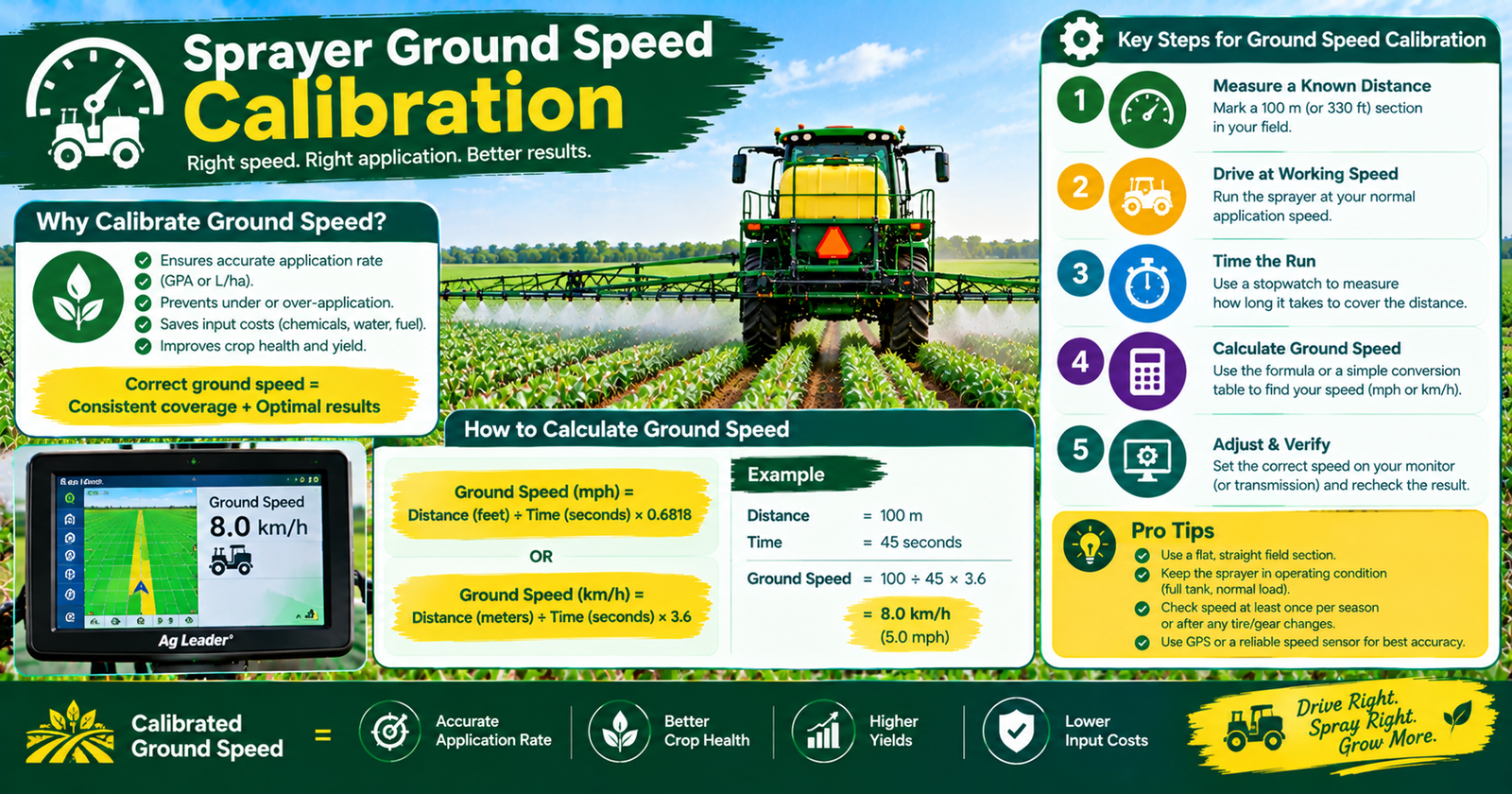
Ground speed is a key input in sprayer calibration because it affects how much area is covered in a given time. If actual speed differs from the speed used in calculations, the application rate may not match the target. Quick answer The safest starting point for sprayer ground speed calibration is to use the exact…
-
Planter Downforce Settings
Planter downforce helps keep row units in contact with the soil so seed can be placed at the intended depth. Too little force can cause shallow planting or row-unit bounce; too much can increase compaction and affect furrow conditions. The right setting depends on the planter and field. Quick answer The safest starting point for…