
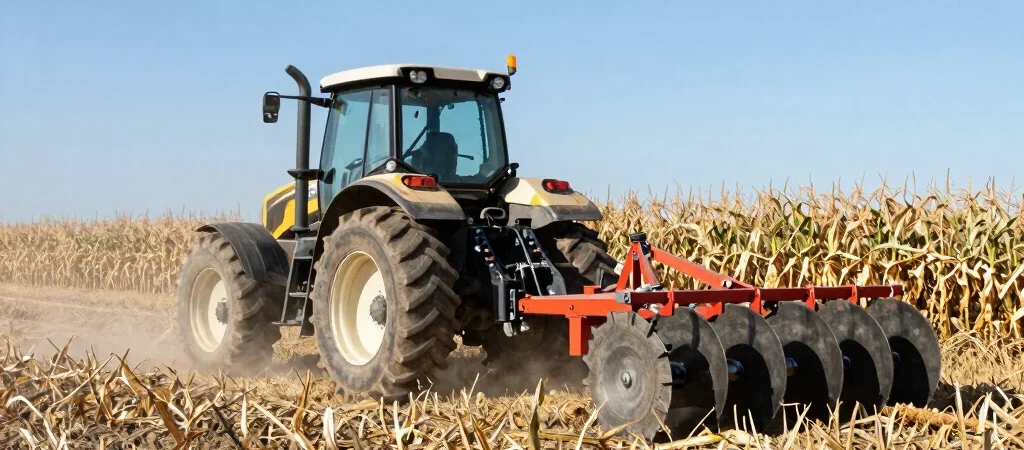
Converting flywheel horsepower into efficient drawbar pull requires precise ballast placement tailored to implement draft requirements. Excess weight increases soil compaction and rolling resistance, while insufficient weight causes destructive wheel slippage and drivetrain strain. Understanding how frame architecture interacts with soil mechanics is essential for maintaining field efficiency in variable soil profiles.
Balancing Static and Dynamic Axle Weight
For four-wheel-drive and articulated tractors, target weight distribution varies significantly between towed drawbar implements and mounted three-point equipment. Under heavy draft loads, weight transfers toward the rear axle as dynamic pull forces increase. Static weighting should maintain a slight forward bias to achieve an even fifty-fifty weight split when the implement is engaged at working depth.
Optimizing Tire Footprints and Inflation Pressure
Fluid ballast inside tires increases unsprung weight but restricts sidewall deflection, which reduces traction in soft soils. Transitioning to cast iron wheel weights alongside radial or VF tire technology allows lower operating pressures while maintaining structural sidewall support. A larger tire footprint spreads machine weight over a broader contact patch, reducing root-zone compaction and lowering total fuel consumption per acre.
Evaluating Dynamic Drawbar Pull Requirements
Deep primary tillage tools like rippers and heavy disk harrows create significant surge resistance as soil density shifts across field topography. Evaluating tractor performance by power growth curves rather than nominal engine ratings reveals how effectively a machine maintains ground speed through hard clay lenses. Transmissions with tightly spaced gear ratios allow engines to remain in their optimal torque band without sacrificing fuel economy.