
Latest posts
-
Combine Header Compatibility
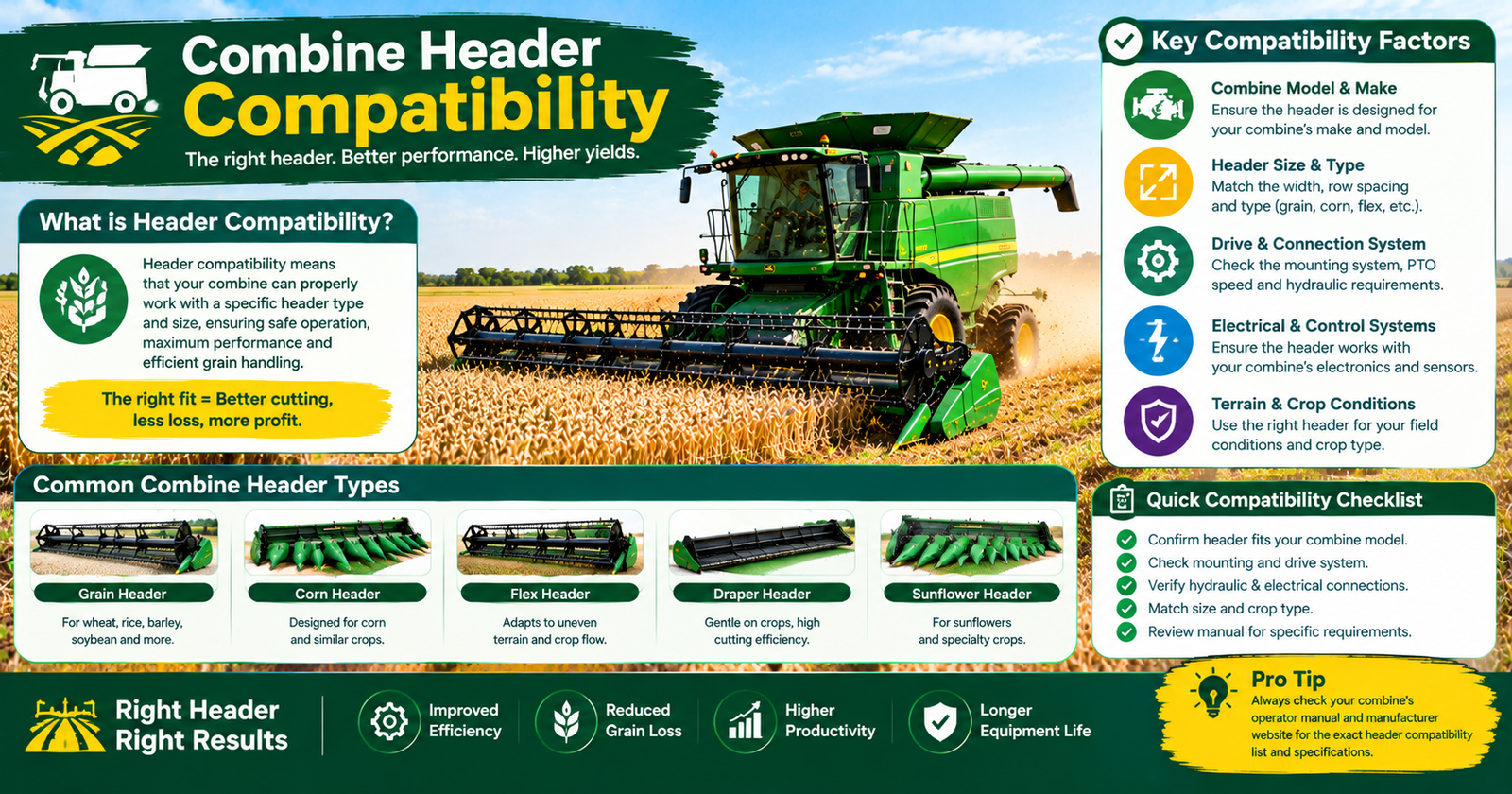
Combine header compatibility involves more than whether a header physically attaches to a combine. The attachment must match the feederhouse, drive system, hydraulics, electrical controls, crop type, capacity, and the manufacturer’s approved configuration. Quick answer The safest starting point for combine header compatibility is to use the exact machine and implement manuals, confirm the relevant…
-
Combine Grain Loss Sensor Calibration
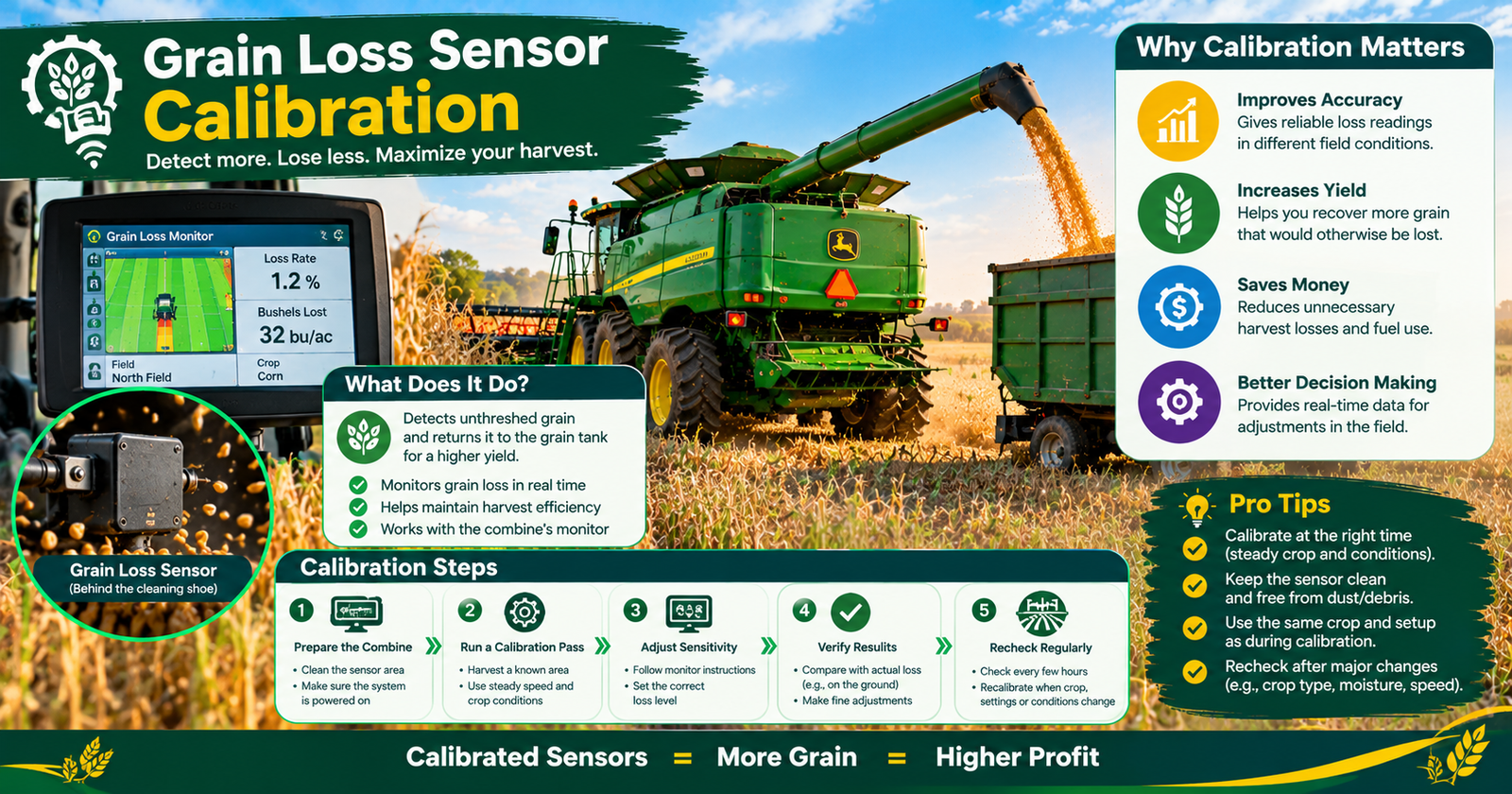
A grain loss sensor helps an operator monitor grain leaving the combine in the cleaning or separation system. Sensor readings are useful indicators, but they are not a substitute for checking actual loss and following the combine maker’s calibration procedure. Quick answer The safest starting point for combine grain loss sensor calibration is to use…
-
Combine Harvester Field Capacity
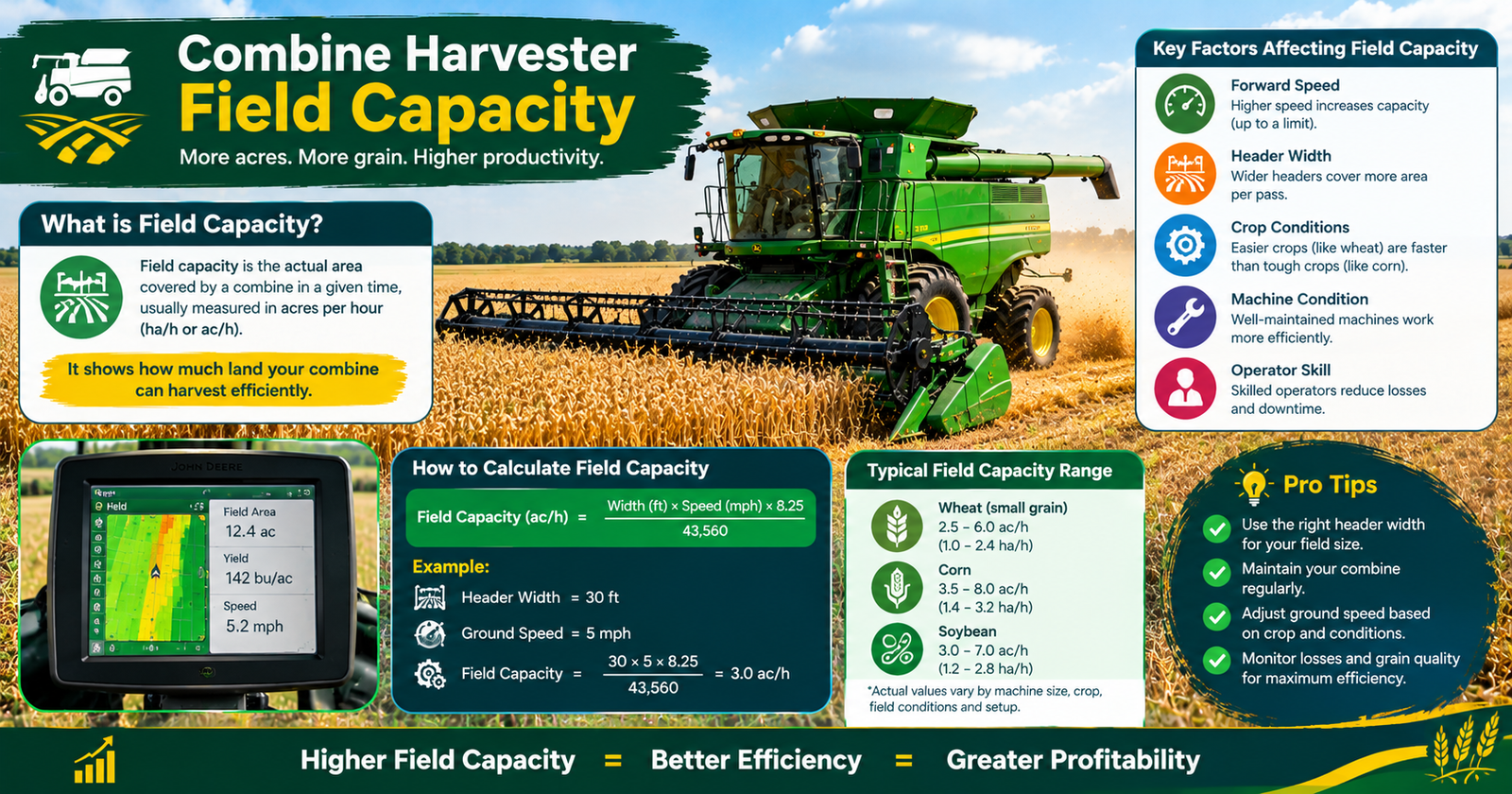
Combine harvester field capacity describes how much area a machine can harvest over time. Theoretical capacity uses header width and travel speed, while effective field capacity accounts for turning, unloading, overlap, crop conditions, and other delays. Quick answer The safest starting point for combine harvester field capacity is to use the exact machine and implement…
-
Combine Grain Tank Capacity
Combine grain tank capacity affects how often a harvester must unload during harvest. A larger tank can reduce interruptions, but actual harvest performance also depends on crop yield, grain bulk density, unloading rate, field layout, and grain-cart logistics. Quick answer The safest starting point for combine grain tank capacity is to use the exact machine…
-
Combine Yield Monitor Accuracy
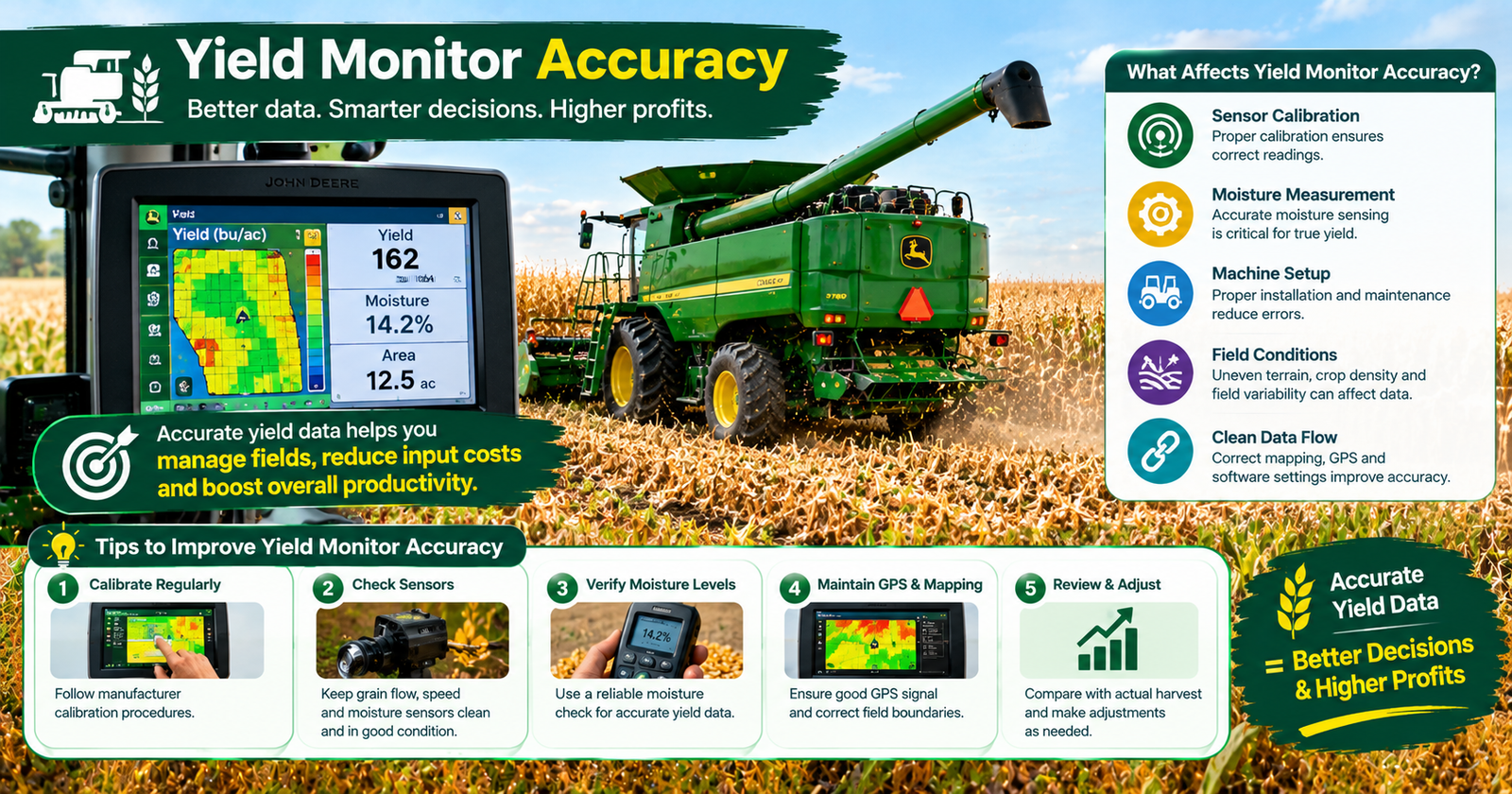
Combine yield monitor accuracy matters when farmers use yield data to compare fields, evaluate crop performance, and plan future inputs. A monitor is an estimate system, and its accuracy depends on calibration, crop flow, moisture readings, GPS, header settings, and data handling. Quick answer The safest starting point for combine yield monitor accuracy is to…
-
Combine Yield Monitor Calibration
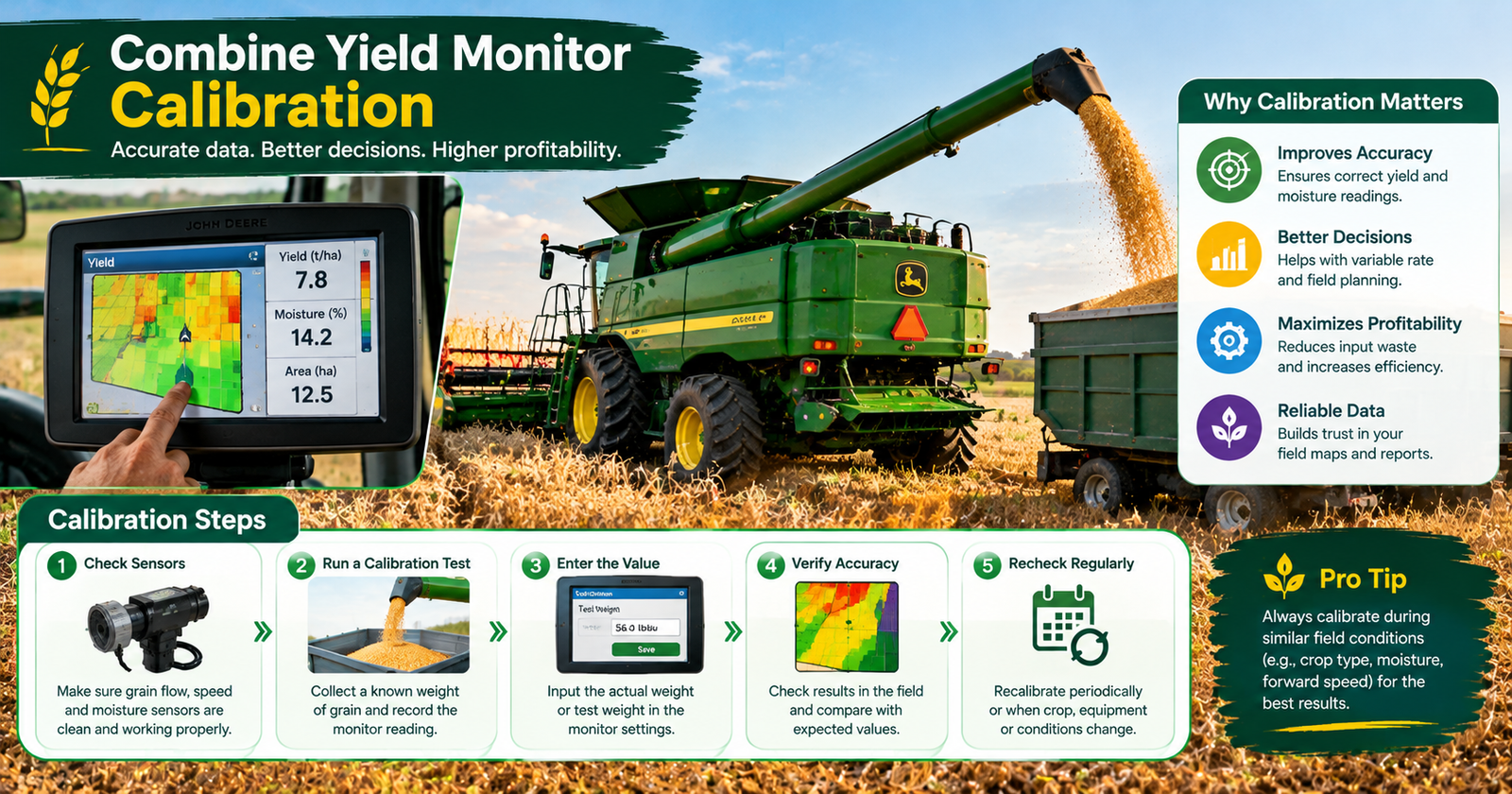
A combine yield monitor estimates crop flow and helps create yield maps. Calibration is important because sensor readings can be affected by crop type, moisture, machine settings, and harvest conditions. A map is only useful when its data are collected and interpreted carefully. Quick answer The safest starting point for combine yield monitor calibration is…